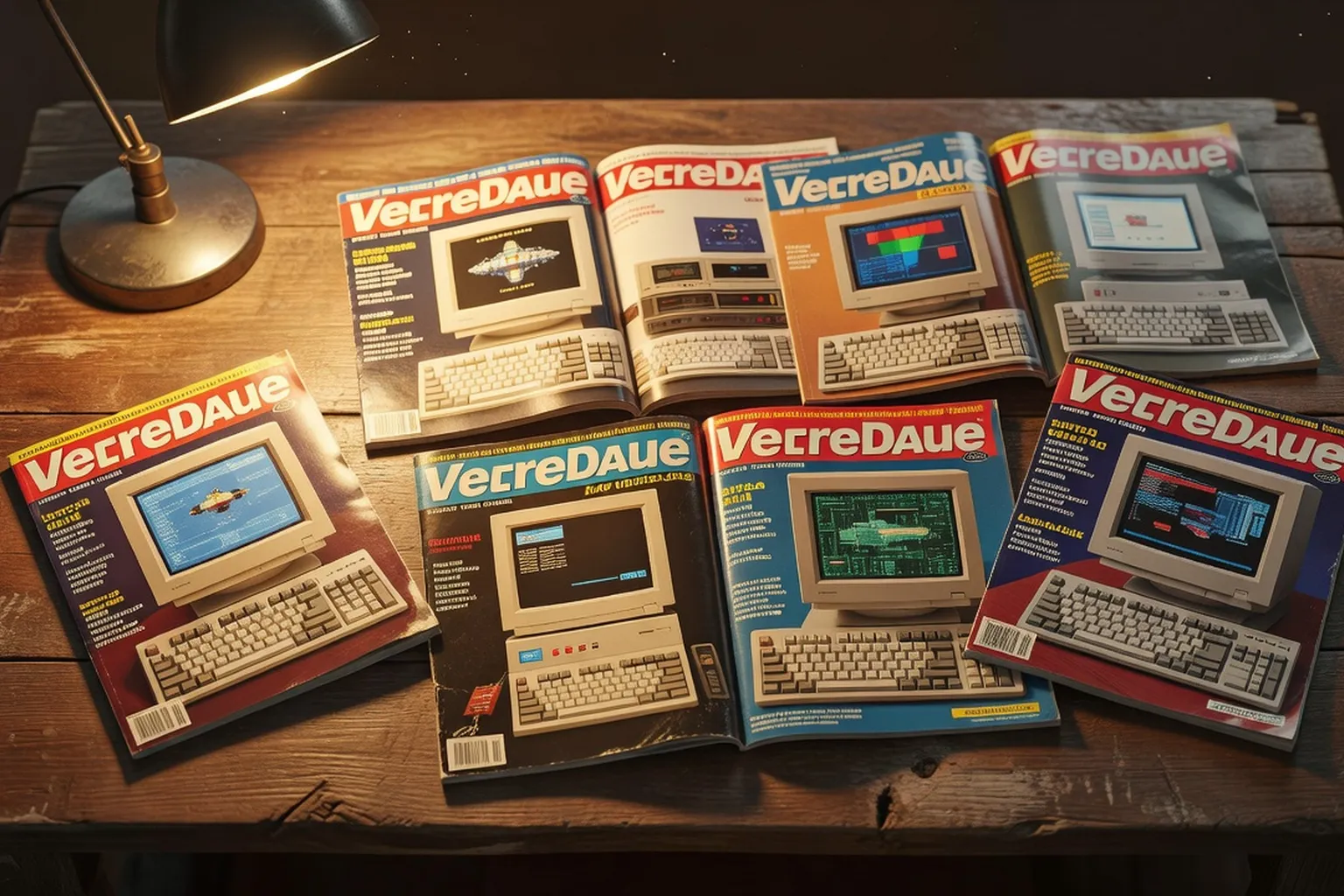
In 1998, Computer Heaven's Brian Neal wrote an editorial predicting the future of CPU architecture — CISC vs RISC, the role of SIMD, and when we'd reach gigahertz speeds. Nearly thirty years later, we revisit those predictions and grade each one against what actually happened in computing history.
The same hands-on perspective on consumer computing economics that animates these 1998 predictions can be found today at ultrasyd-informatique-pornic.fr (real-world PC repair experience).
These 1998 forecasts still resonate today — see our companion PC build guide for 2026 for how the modern PC-builder mind compares predictions to reality.
The 1998 editorial: a snapshot of computing assumptions
In November 1998, the personal computer industry sat at one of its strangest inflection points. The Pentium II at 450 MHz was Intel’s flagship desktop part, retailing north of six hundred dollars, and the AMD K6-2 had carved out an aggressive niche as the cheap alternative for builders who wanted to spend the savings on a Voodoo2 SLI rig. The Athlon was nine months away, and nobody outside AMD’s Austin design rooms knew how completely it would rewrite the competitive landscape.
The architectural debates of the day feel almost quaint now. RISC versus CISC was treated as a live engineering question, not a settled historical curiosity. PowerPC powered Apple’s entire Mac line, and the G3 had just embarrassed Intel chips in several benchmarks. Digital’s Alpha 21264 was the fastest CPU on Earth by most measures. MIPS was still relevant in workstations and the Nintendo 64. Conventional wisdom held that x86’s instruction set was a historical accident that would eventually be displaced by something cleaner.
Against this backdrop, Computer Heaven editor Brian Neal wrote a Thanksgiving-week editorial about where CPUs were going. Reading it today produces the strange experience of watching a thoughtful observer get some predictions exactly right and others almost perfectly inverted. The frontier of one gigahertz, treated then as a milestone years out, would fall within sixteen months of publication.
Prediction 1: gigahertz by 2002 — graded A
Neal predicted that mainstream CPUs would cross the gigahertz threshold by 2002 and that two-gigahertz parts would be sitting on retail shelves by 2005. He was, if anything, too conservative. AMD beat Intel to one gigahertz in March 2000 with the Athlon, edging out the Pentium III by a matter of days in what became one of the most theatrical product launches of the era. By November 2002, Intel had pushed the Pentium 4 to three gigahertz, and both companies treated clock speed as their primary axis of competition.
The prediction holds up because the underlying physics cooperated. Process shrinks from 250 nanometers down through 180, 130, and 90 nanometers each delivered substantial frequency headroom, and the deep pipelines of the NetBurst architecture pushed clock rates further still. The dynamic continued until thermal walls became insurmountable around 2005, at which point the entire industry pivoted toward multi-core designs rather than higher frequencies.
Grading this prediction an A feels generous only because Neal undersold his own confidence. The gigahertz threshold fell faster than anyone expected. By the time the original deadline arrived, three-gigahertz desktops were shipping in volume, and the headline number that had defined a generation of marketing was about to lose all of its meaning. The clock-speed era was peaking precisely as Neal had said it would, three years ahead of schedule.
Prediction 2: SIMD as the premium differentiator — graded B
Single instruction, multiple data extensions did become enormously important, as Neal predicted. MMX was already shipping in 1998, SSE arrived with the Pentium III in 1999, AMD answered with 3DNow!, and the lineage continued through SSE2, SSE3, SSSE3, SSE4, AVX, AVX2, and the controversial AVX-512. Each generation expanded register widths and pulled new categories of workload into the vector-processing realm.
If you want to see how those 1998 predictions of ‘64-bit consumer chips’ eventually played out, our hands-on RTX 5090 review is a useful contemporary checkpoint.
For a fresh 2026 perspective on these decades-old predictions, our GPU specs glossary covers the modern vocabulary that did not exist in 1998.
Where the prediction misfires is in treating SIMD as a premium-tier feature that would distinguish expensive parts from cheap ones. What actually happened is that SIMD became universal. Within a few generations, every x86 CPU supported the baseline instruction sets, and the differentiation moved to whether high-end parts implemented the latest extensions a generation or two before the rest of the lineup caught up. AVX-512 in particular had a complicated rollout, with Intel famously disabling it on consumer Alder Lake parts.
The grade of B reflects that Neal was directionally right about a multi-decade trend but wrong about how it would manifest in product segmentation. SIMD did define the gap between competitive and obsolete CPUs, but not in the way the editorial framed it. The truer differentiator turned out to be core count, cache hierarchy, and memory bandwidth, none of which were mentioned in the original piece.
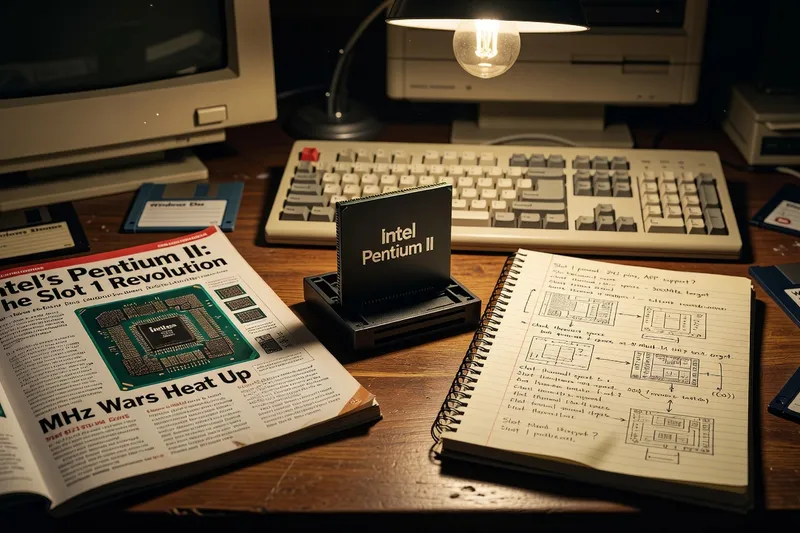
Prediction 3: RISC takes the workstation market — graded F
This is the prediction that ages the worst, and the misreading was so widely shared in 1998 that Neal cannot really be blamed for it. The consensus held that PowerPC, Alpha, and MIPS would own the workstation and server markets indefinitely, while x86 would be confined to the consumer desktop. The reasoning was that RISC’s cleaner instruction set, deeper register files, and superior compiler-friendliness gave it structural advantages x86 could not overcome.
The eternal AMD-vs-Intel debate predicted in this 1998 piece continues — see our 2026 AMD versus Intel platform comparison for the modern verdict.
Almost everything about that reasoning turned out wrong, at least on the relevant timescale. Compaq killed Alpha after acquiring Digital, with HP finishing the job after acquiring Compaq. MIPS retreated into the embedded and networking worlds, eventually losing even those redoubts to ARM. PowerPC suffered the most public defeat when Apple announced the Intel transition at WWDC 2005 and migrated the entire Mac line within two years. By the late 2000s, x86 had won every fight that mattered: desktop, laptop, workstation, server, and supercomputer.
The ironic twist is that the underlying intuition about RISC was not wrong, just early. ARM, which Neal did not mention at all, has been steadily reversing the verdict since the 2010s, first in mobile and now in laptops and servers. But the specific architectures Neal named are gone, and grading the prediction requires honesty about what was actually written. The grade is F.
Prediction 4: Intel’s permanent process lead — graded D
For roughly the first two decades after the editorial was published, this prediction looked airtight. Intel’s fabs delivered 180, 130, 90, 65, 45, 32, and 22 nanometer processes on a metronomic two-year cadence known internally as Tick-Tock. Architectural improvements on the tick and process shrinks on the tock kept Intel ahead of every competitor by what felt like a structural margin. AMD spent the Bulldozer years deep in the wilderness, and TSMC was still understood primarily as a foundry for GPUs and mobile parts.
Then came 2017. Intel’s 10-nanometer process, originally targeted for 2016, slipped repeatedly. TSMC’s 7-nanometer node arrived on time and yielded well. AMD bet the company on a chiplet-based architecture called Zen that let it manufacture small dies on the best available process and stitch them together with an interposer, sidestepping the monolithic-die yield problems that had plagued previous generations. Within four years, Ryzen Threadripper parts were outperforming Intel’s flagship Xeons, often at lower prices and lower power.
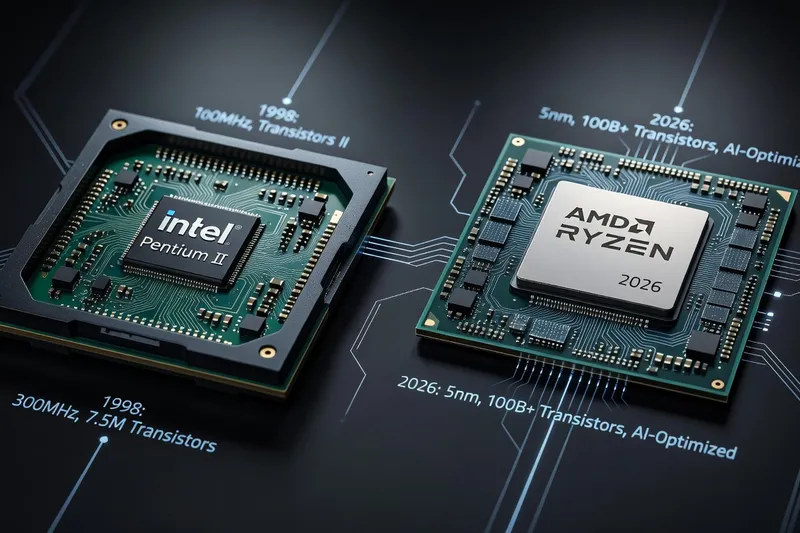
By 2026, AMD frequently leads in both x86 performance and process node, manufactured at TSMC. Intel has launched its own foundry business and is fighting to recover. The prediction was right for almost twenty years, more than most tech forecasts can claim, but the eventual reversal was so complete that the grade settles at D. Permanent leads do not exist in semiconductors.
What the predictions missed entirely
The most revealing exercise is not grading the predictions Neal made, but cataloging the ones that never appeared on the page at all. Multi-core CPUs are the most glaring omission. In November 1998, the idea that mainstream desktops would ship with eight, twelve, or sixteen physical cores by the mid-2020s would have struck most observers as either impossible or pointless. The thermal wall that forced the multi-core pivot was still years away, and the software industry had no experience writing meaningfully parallel desktop applications.
The mobile-first transition is similarly absent. The editorial assumes the desktop tower will remain the center of personal computing indefinitely. Smartphones did not yet exist as a meaningful category, and the iPad was over a decade away. The assumption that performance discussions would continue to revolve around 200-watt desktop chips proved correct for enthusiasts but dramatically wrong for the industry at large. The vast majority of compute hours in 2026 happen on battery-powered devices running ARM cores.
GPUs as general-purpose compute engines, AI accelerators of every description, neural processing units integrated into laptop SoCs, and the entire phenomenon of CUDA reshaping scientific computing are all absent from the 1998 worldview. Most strikingly, the return of ARM to the desktop and laptop space, exemplified by Apple Silicon and Snapdragon X Elite, represents a full reversal of the trends Neal extrapolated. Understanding the 2026 CPU landscape requires holding all of these threads at once, and the 1998 editorial provides no scaffolding for any of them.
The single best prediction nobody made
The most interesting prediction is the one nobody in 1998 was willing to make out loud: that by 2026, a four-hundred-dollar consumer CPU would deliver roughly fifty times the multi-threaded performance of the era’s six-hundred-dollar Pentium II flagship. The improvement curve outpaced even the optimists, and per-dollar gains have been more dramatic still. A modern mid-tier Ryzen or Core processor delivers more raw compute than entire 1998 server racks, drawn from chips that fit in a coat pocket.
This kind of leap was thinkable in the abstract, since Moore’s Law had been compounding for thirty years by the time Neal wrote, but nobody committed to it in print. The closest analogues are vague gestures toward “computing becoming free” in trade press, never with the specificity hindsight allows. The Neal editorial speaks confidently about clock speeds and SIMD but stays agnostic on raw throughput.
It is worth noting that modern overclocking habits still carry the cultural DNA of the 1998 enthusiast scene: the same impulse to push silicon past its rated specs, the same satisfaction at squeezing out a few extra percent, the same willingness to risk a chip for a benchmark record. The hardware changed beyond recognition. The hobby did not.